À propos


E-coop in Tanzania
Par Partners of e-coop projecten September 2022 -  contribuer
The fourth city of Tanzania welcomes the establishment of an e-Boda cooperative, whose objective is to empower communities to take on production, operation, and services thanks to an open source software.
Establishing a worker-owned cooperative
The tanzanian makerspace Robotech Labs, the tanzanian open innovation organization TOIO, the chinese open innovation lab SZOIL and FabMob are working towards Tanzania’s very first e-Boda COOP. The objective is to establish worker-owned cooperatives of electric transportation and empower communities to take on production, operation, and services. The cooperative model brings the maximum benefits and rewards of transportation and related services to the local communities. The cooperative model could scale by replications of forming of new coops in many communities. The COOP will collaborate by running on open source software with services and data federation to provide a seamless experience to the ride-sharing and delivery services’ end-user. Local authorities of Tanga are open to work on the project creating guidelines that will fall under the regulations of deployable vehicles. If possible, the data collected on the platform would also help the local authorities finding out about its citizens’ mobility needs.
What is a Co-operative?
A cooperative is an autonomous association of persons united voluntarily to meet their common economic, social, and cultural needs and aspirations through a jointly-owned and democratically-controlled enterprise. The coop operates with the seven principles defined in the Statement on the Cooperative Identity (Manchester, 1995) :
1.Voluntary and Open Membership
2.Democratic Member Control
3.Member Economic Participation
4.Autonomy and Independence
5.Education, Training, and Information
6.Cooperation among Cooperatives
7.Concern for Community
E-Boda in Tanzania and Local Manufacturing
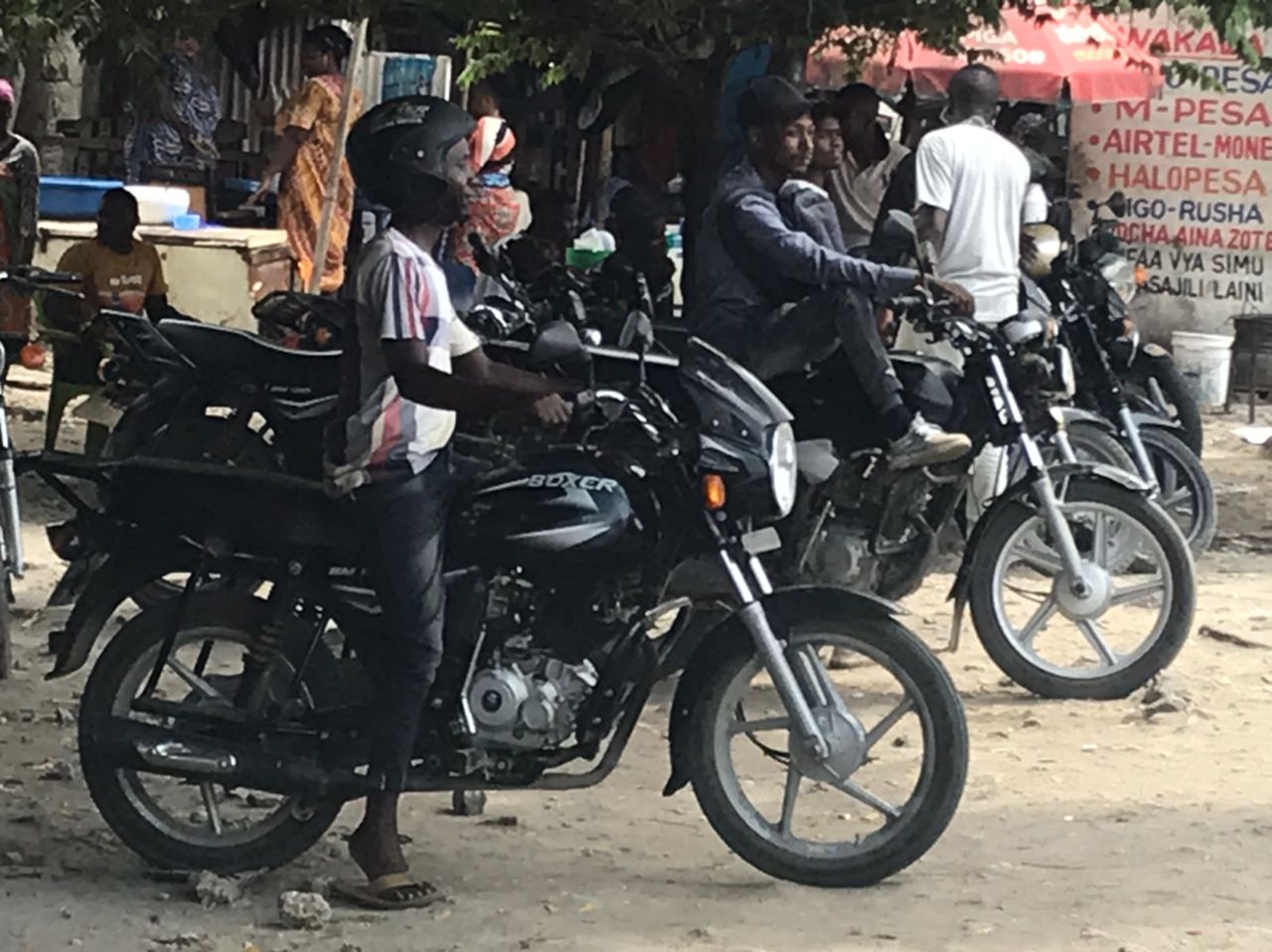
In Tanzania, Bodas not only move people and goods around the city but also employ hundreds of thousands of riders. In Tanga, two main areas concentrate the trips : downtown Tanga and Muheza. The riders operate independently, they often start by renting the motorcycle from the owners and save up enough in a year or two to purchase his/her motorcycle, commonly used. There were efforts to facilitate the riders to be financed by SACCO (Savings and Credit Cooperative Organization) but the cooperative model as an organized enterprise can help to reduce the risk of financing.
The used motorcycles are often used beyond their warranty and are one of the contributing factors to traffic accidents. The collectively owned fleet of locally produced and maintained vehicles will help keep the motorcycles in better condition that could reduce traffic accidents.
The first contribution of the replacement of the current thermal motorbikes by electric motorbikes with interchangeable batteries is environmental. Electric power improves local air quality and reduces noise. Moreover, the technical simplification of the vehicles brought about by this technology allows the drivers to take control over the manufacturing and repairing process. The vehicles will be delivered in spare parts and training in the assembly of motorbike taxis will be provided on site. It will enable them to repair their vehicles themselves in the event of a breakdow and it allows the partners to lower the cooperative startup cost with cost-effective parts to be assembled in Tanga. The model also provides a gradual path to expand manufacturing with import substitutions as the numbers of coops increase to create enough demand for the parts to support local manufacturing.
Open Source digital Platform
Modern urban mobility is becoming more digital that are currently dominated by large platforms such as uberBoda. The platforms take a sizable chunk of the riders’ income. The coop will run on open-source fleet management and mobility services platforms such as Coopcycle or LibreTaxi operated locally instead of large proprietary platforms. The digital platform operation costs only 5-7% of the fare instead of 20-25% currently charged by large platforms. It will also give the drivers and contributors the opportunity to visualize and control the data that are collected through it.
Experimenting ... To replicate ?
The project is an opportunity for the partners to understand how cooperatives can be created and developed in Tanzania and on a larger scale on the African continent. It will demonstrate the interest of this model to lead entrepreneurial projects in mobility and to share resources, such as the vehicle fleet or the digital platform.